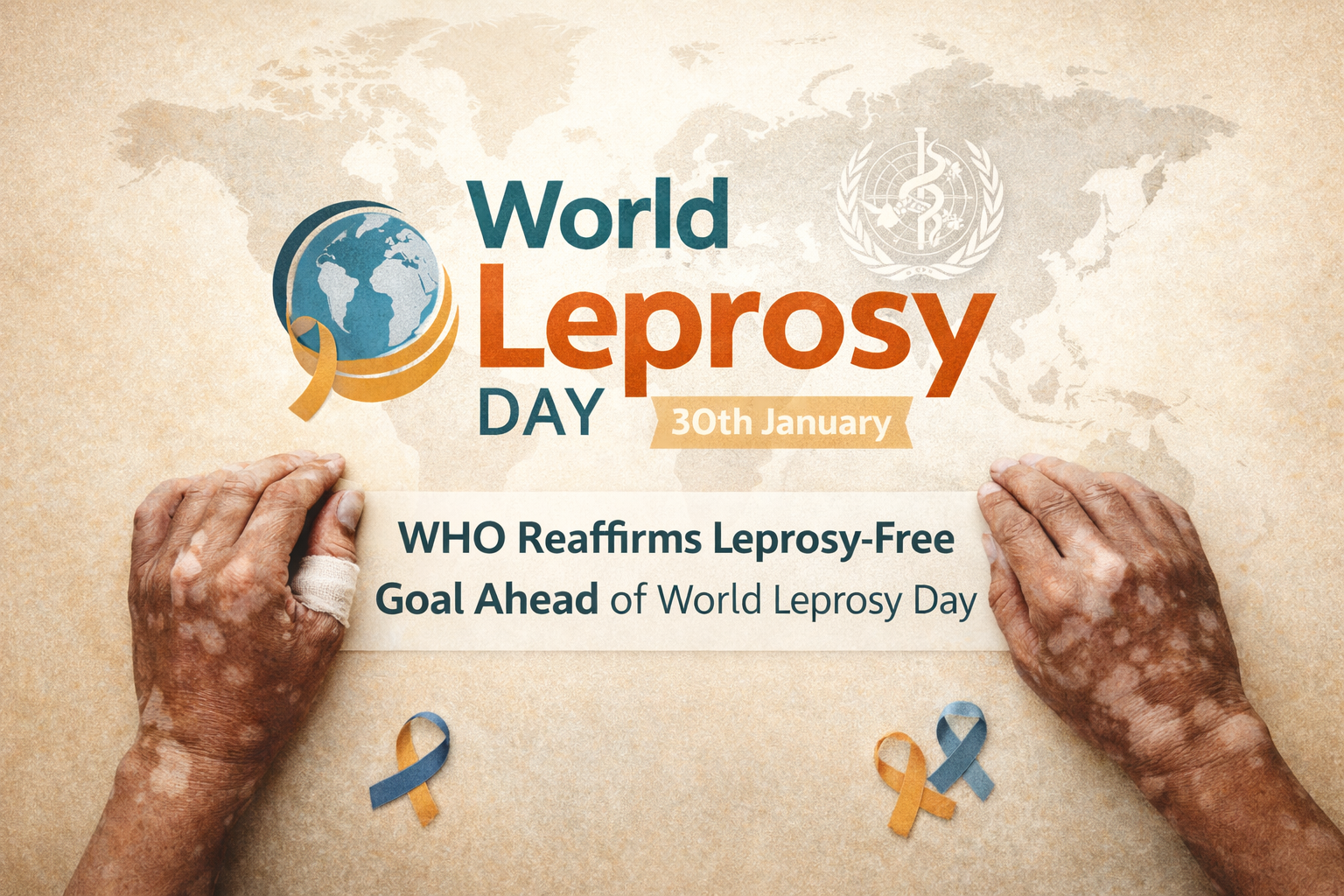
World Leprosy Day on 25 January, the World Health Organization (WHO) has emphasized that ensuring access to treatment remains critical to the global goal of eliminating leprosy.
Leprosy is a long-known infectious disease caused by the bacterium Mycobacterium leprae. It mainly affects the skin and peripheral nerves. If not treated in time, it can lead to permanent disabilities and result in stigma and social exclusion. However, leprosy is fully curable with multidrug therapy (MDT).
Global elimination efforts have significantly reduced new cases in many regions. In 2024, out of 188 reporting countries and territories, 55 recorded zero new cases. Despite this progress, 172,717 new cases were still detected and reported worldwide during the same year.
Strong partnerships have played a key role in these advances. Pharmaceutical companies, particularly Novartis, have been major contributors to leprosy elimination efforts. Since 2000, WHO and Novartis have worked together to provide MDT and clofazimine free of charge to leprosy patients globally—making this one of the longest-running medicine donation programmes in global health.
To mark 25 years of collaboration, WHO and Novartis have renewed their Memorandum of Understanding for another five years (2026–2030). The renewed agreement ensures the continued supply of MDT and also includes financial support for the procurement and distribution of single-dose rifampicin for post-exposure prophylaxis.
Dr Jeremy Farrar, WHO Assistant Director-General for Health Promotion, Disease Prevention and Care. Highlighted the importance of this partnership, noting that sustained support from partners like Novartis has been central to progress against leprosy. He emphasized that free access to treatment has transformed millions of lives and demonstrated the impact of global collaboration rooted in science, equity and shared commitment.
The availability of free MDT has enabled effective cure, disability prevention and stigma reduction. Allowing affected individuals to live productive lives. Clofazimine has also been crucial in managing lepra reactions—severe inflammatory episodes that can cause lasting disabilities if untreated.
Dr Lutz Hegemann, President of Global Health at Novartis, reaffirmed the company’s commitment, stating that combating leprosy has long been part of Novartis’ legacy. Over the past 25 years, the partnership with WHO has reached millions of patients and the company remains dedicated to advancing the goal of a leprosy-free world.
Despite substantial achievements, continued political will, community involvement and strong partnerships are essential to sustain progress.
The theme of World Leprosy Day this year is “Leprosy is curable, the real challenge is stigma.”
This year also marks 25 years of service by Mr Yohei Sasakawa as WHO Goodwill Ambassador for Leprosy Elimination. He underscored that stigma often poses a greater challenge than the disease itself, particularly for those left with disabilities. Even after cured, many individuals face discrimination such as forced separation, loss of education or employment, and long-term social exclusion.
As leprosy is among the Neglected Tropical Diseases (NTDs). These efforts also contribute to the broader global mission to eliminate NTDs. WHO encourages participation in collective action through World NTD Day 2026, to observed on 30 January.