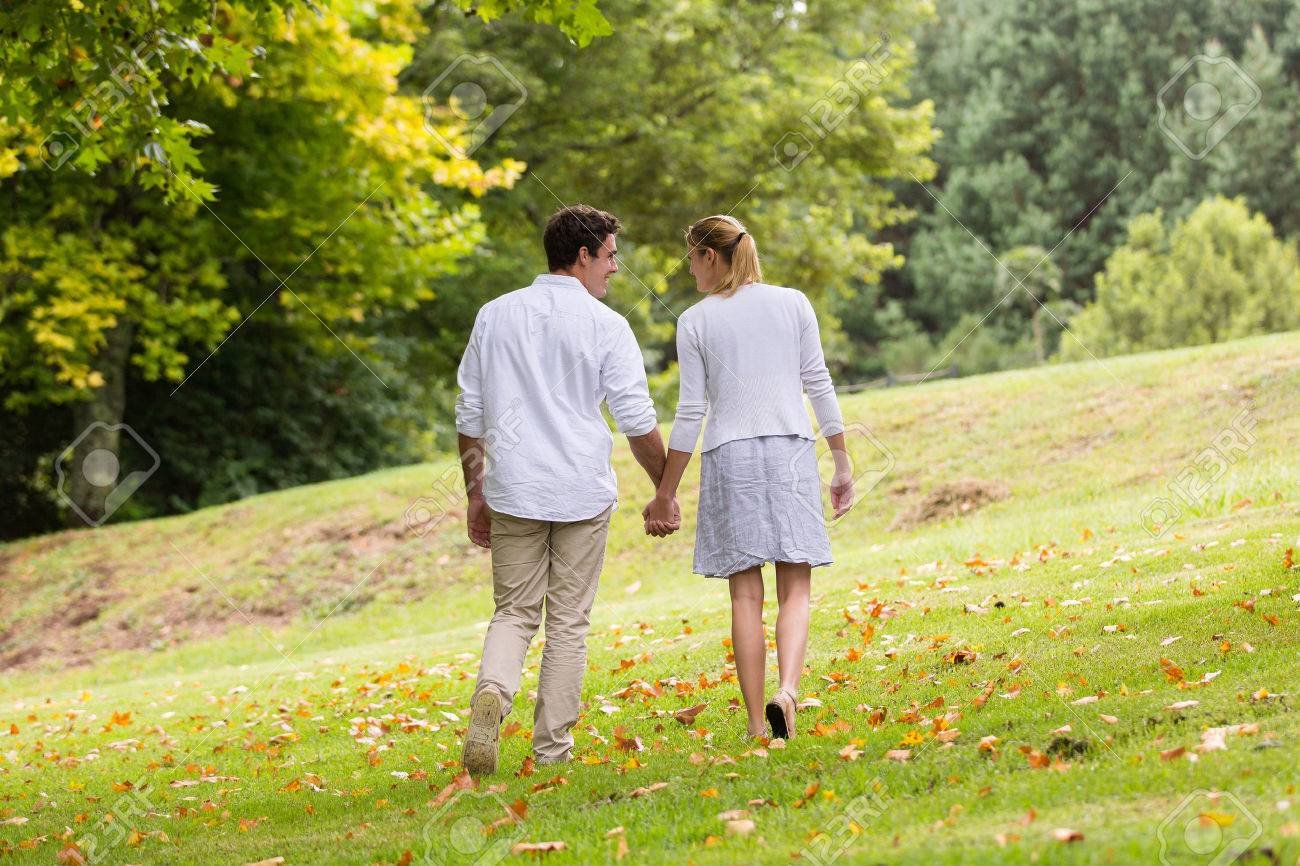
A new study done by some researchers at Purdue University says that if you walk hand in hand with your partner, you might miss some health benefits because it slows down the speed of your walk.
The study looked at walking times and gait speeds of 141 individuals from 72 couples. The participants ranged from age 25-79 and were in numerous settings, including clear or obstacle-filled pathways, walking together, walking together holding hands and walking individually.
“In our study, we focused on couples because partners in committed relationships often provide essential support to promote one another’s healthy lifestyle behaviors, including exercise,” says Melissa Franks, associate professor of human development and family studies.
Libby Richards, associate professor of nursing, says, “We were hoping that there would not be a reduction in speed where partners walked together. We hoped that slower partners would speed up to match the faster partner, but that was not the case. However, it’s important to note that any physical activity or walking — regardless of speed — is better than none.”
Richards says it is common for people to walk or exercise with a spouse, partner or friend, as it increases one’s likelihood to be active, especially as Americans are encouraged to meet a goal of 150 minutes of moderate activity every week.
“If someone substantially slows down when they are walking with someone else, that could negate some of the health benefits recognized if they walked alone at a faster pace,” Richards added.
Shirley Rietdyk, professor of health and kinesiology who specializes in biomechanics, says, “there are many reasons to measure gait speed, Gait speed is important to measure because it is related to overall health. Typical gait speed is predictive of fall risk, functional ability, disability recovery and mortality.”
“Common exercise interventions, including strength, coordination and multimodal training, are all effective in increasing gait speed. These interventions can also delay the onset of slower gait speed and help slow the loss of gait speed. No one type of training is better than the other, so do the activity you are most likely to stick with.”
Despite walking being the easiest workout, older people find other workout routines as they get older and also, people tend to walk slower as they get old this might be the reason for changing the way of making themselves fit and healthy.
“Older adults who are more active tend to maintain their gait speed,” Rietdyk says. “In other words, slower gait speed is not an inevitable aspect of aging. Older adults who walk slower tend to have poorer health and lower functional status.”