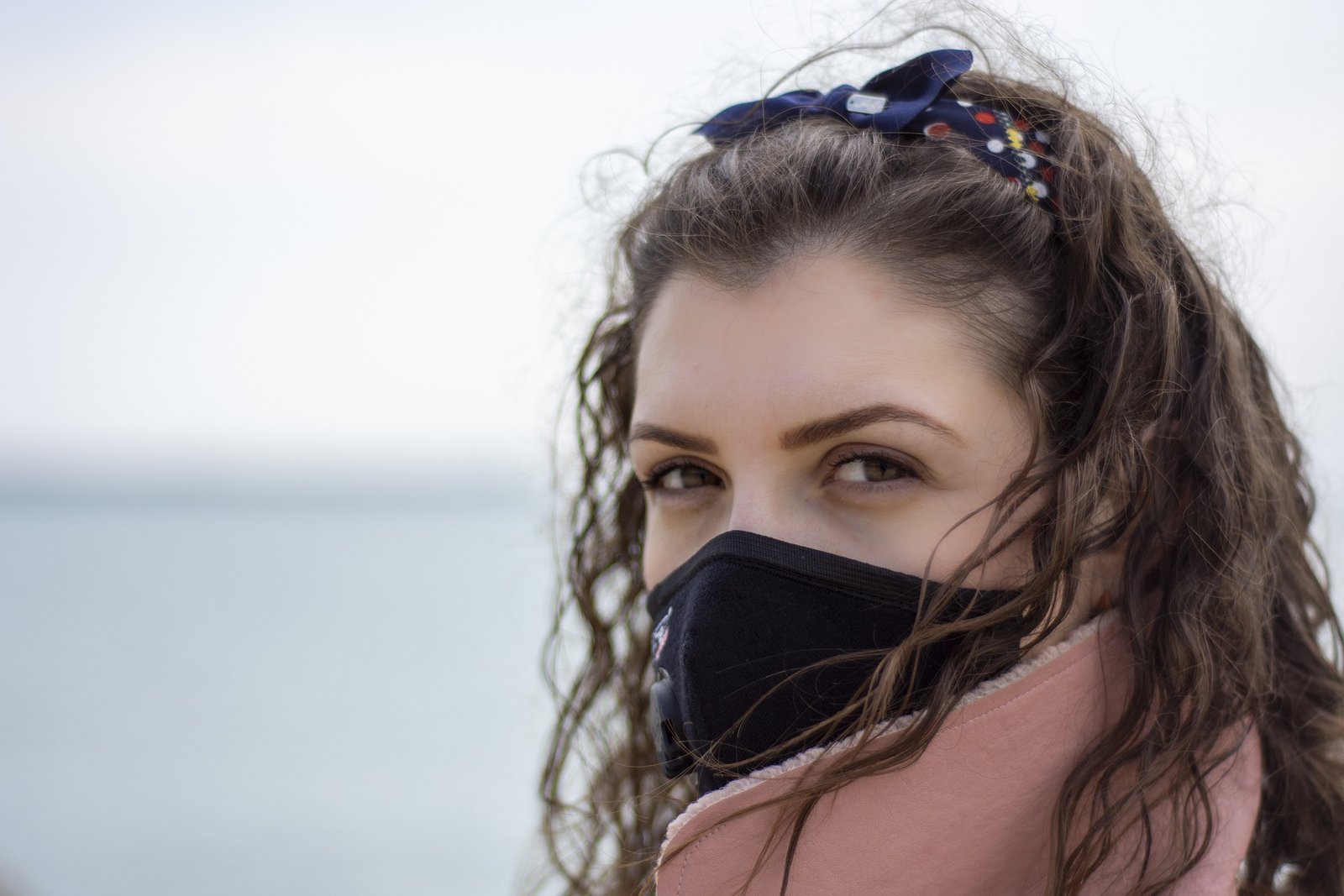
A major study of novel coronavirus infection in human airways adds to evidence that wearing a mask is an important step toward limiting transmission of COVID-19.
In a scientific article published in the journal Cell, scientists at the UNC Gillings School of Global Public Health and the UNC School of Medicine have characterized the specific ways in which SARS-CoV-2 — the coronavirus that causes COVID-19 — infects the nasal cavity to a great degree by replicating specific cell types, and infects and replicates progressively less well in cells lower down the respiratory tract, including in the lungs.
The findings suggest the virus tends to become firmly established first in the nasal cavity. Then, in some cases, the virus is aspirated into the lungs where it may cause more serious disease, including potentially fatal pneumonia.
“If the nose is the dominant initial site from which lung infections are seeded, then the widespread use of masks to protect the nasal passages, as well as any therapeutic strategies that reduce virus in the nose, such as nasal irrigation or antiviral nasal sprays, could be beneficial,” said study co-senior author Richard Boucher, MD, the James C. Moeser Eminent Distinguished Professor of medicine and director of the Marsico Lung Institute at the UNC School of Medicine.
“This is a landmark study that reveals new and unexpected insights into the mechanisms that regulate disease progression and severity following SARS-CoV-2 infection,” said Ralph Baric, PhD, professor of epidemiology at the UNC Gillings School of Public Health. “In addition,” Baric continued, “we describe a new reverse genetic platform for SARS-CoV-2 allowing us to produce key indicator viruses that will support national vaccine efforts designed to control the spread and severity of this terrible disease.”
The researchers used a reverse genetics system to generate a GFP reporter virus to explore SARS-CoV-2 pathogenesis. The authors wrote that “high-sensitivity RNA in situ mapping revealed the highest ACE2 expression in the nose with decreasing expression throughout the lower respiratory tract, paralleled by a striking gradient of SARS-CoV-2 infection in proximal (high) vs distal (low) pulmonary epithelial cultures.”
The researchers used different isolates of SARS-CoV-2 to see how efficiently they could infect cultured cells from different parts of the human airway. They found a striking pattern of continuous variation, or gradient, from a relatively high infectivity of SARS-CoV-2 in cells lining the nasal passages, to less infectivity in cells lining the throat and bronchia, to relatively low infectivity in lung cells.
ACE2—the cell surface receptor that the virus uses to get into cells—was found to be more abundant on nasal-lining cells and less abundant on the surface of lower airway cells. This difference could explain, in part, why upper airway nasal-lining cells were more susceptible to infection.
Other experiments focused on TMPRSS2 and furin, two protein-cleaving enzymes found on many human cells. It’s thought that SARS-CoV-2 uses those two enzymes to re-shape key virus proteins and enter human cells. The experiments confirmed that when these human enzymes are more abundant, this particular coronavirus has an increased ability to infect cells and make copies of itself.
Intriguingly, the virus did not infect airway-lining cells called club cells, despite the fact that these cells express both ACE2 and TMPRSS2. Moreover, the same types of airway epithelial cells from different human donors, especially lower-airway epithelial cells, tended to vary significantly in their susceptibility to infection. Such findings suggest that there are undiscovered factors in airway cells that help determine the course of infection in individuals—a course known to vary widely from mild or no symptoms all the way to respiratory failure and death.
The team mapped the sites of coronavirus infection in the lungs of several people who had died from COVID-19, and found that these sites exhibited a sort of patchiness and other characteristics consistent with the hypothesis that these sites had originated from infection higher in the airway.