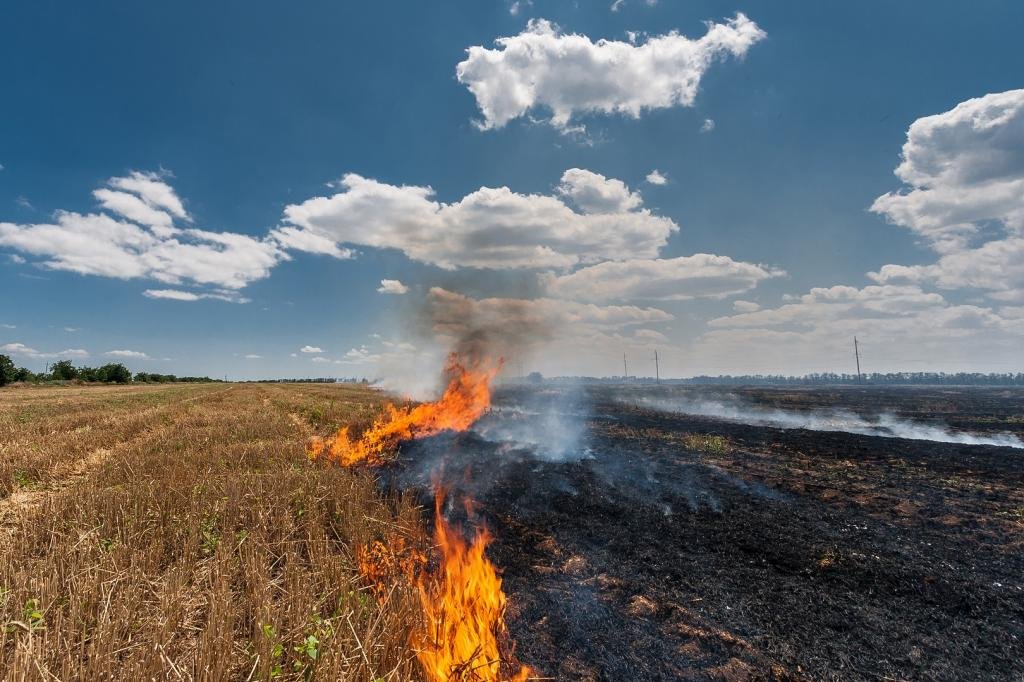
Anand Mahindra tweeted, on November 22nd, about Urban Farms Co., an initiative that, among other things, offers up a solution for Delhi’s stubble burning issue. Urban Farms Co. asserts that stubble can actually be a valuable commodity for the farmer— if it is not burnt but instead transformed into compost to fertilise the soil.
Urban Farms Co., with a Regenerative Farming (see below) Hub in Palla, on the outskirts of Delhi, has proven that the soil nourished by the compost made out of this stubble will grow food—vegetables, in the case of Urban Farms Co.—that is chemical free and has a far greater nutrient density than crops grown with chemical fertilisers. These vegetables are full of vitamins, nutrients and phytonutrients leading to greater health, wellness and vitality for those who consume them. And they look and taste better too.
Nature is powerful. Nature is regenerative.@naandi_india’s @UFCo_India proves this by reverting the stubble that has been the cause of pollution to where it belongs: back to the soil to add nutrients to the food we eat.#ReGenAgri#UFCoIndia pic.twitter.com/GiWez0uGQ7
— anand mahindra (@anandmahindra) November 22, 2021
What Urban Farms Co. has at its core, however, over and above providing a solution for Delhi’s stubble burning crisis and the consequent pollution, is an urban food system (distinct from a rural or tribal food system) for the future. This kind of food system becomes all the more relevant in light of the fact that India is witness to rapid urbanisation, with over 31% of its population residing in urban areas. Indian cities will need a constant supply of nutritious and healthy, yet reasonably priced, food. But what is the most efficient way of supplying them with the same?
Urban Farms Co. has an answer to this. It works in partnership with farmers around its hub at Palla, not only training and coaching them on Regenerative Farming practices, but also offering guaranteed buyback at rates that are significantly higher than market rates. As a consequence, it is already among the largest growers and suppliers of chemical free vegetables to Delhi. Its Regenerative Organic (see below) Food System has been awarded by the Rockefeller Foundation as one of the top 10 ‘Visionaries’ in the world for the prestigious ‘Food Vision 2050 Prize’.
Mahindra had quote-tweeted Manoj Kumar, the CEO of Naandi Foundation, which Urban Farms Co. is associated with. Kumar had also reiterated Urban Farm Co.’s belief in ‘Regenerative Agriculture’, a concept that makes it possible for this enterprise to deal with the issue of stubble burning while simultaneously saving the soil and helping farmers grow food with a higher nutrient value at the same time.
A solution to Delhi’s stubble burning crisis lies on the outskirts of the city.@UFCo_India uses ‘Regenerative Agriculture’ to tap into nature’s power to transform: it turns stubble into compost for growing nutrient rich vegetables for Delhi.#UFCoIndiahttps://t.co/7aq9sfr1RD pic.twitter.com/LP9TAjbFX9
— Manoj Kumar (@manoj_naandi) November 22, 2021
Regenerative Agriculture derives its impetus from the Climate Change movement and has its roots in ‘Regenerative Organic’, a nomenclature initiated by the Rodale Institute, USA, to represent a movement which is fast changing the worldwide narrative to show that bio science-based natural agriculture can restore ecology, reverse climate change, benefit farming communities and feed entire populations with healthy food. Furthermore, unlike some organic initiatives which cater to a niche, Urban Farm Co.’s Regenerative Organic model is relevant to mainstream, large scale farming, for reasons of being more cost-efficient and easier to adopt— therefore making it suitable and potentially attractive for many Indian farmers.
Regenerative Agriculture revitalises soil health. It builds organic matter back into the soil, effectively storing more water and drawing more carbon out of the atmosphere. It utilizes what most consider ‘agri-waste’, metamorphosing it into something valuable. For instance, there may be other efforts that aim to utilise stubble, but Urban Farms Co. returns it to where it truly belongs: the soil. Urban Farms Co. recognizes, within the stubble and crop residue that they procure from farmers, a precious substance: organic carbon, an essential component of living soil and groundwater systems. After collecting the stubble from farmers around Delhi—thereby preventing it from getting burnt—Urban Farms Co. employs it, along with other organic matter and microbial life, to create high-quality professional-grade plant food. They encourage their partner farmers to use this compost as well, to bring their soil back to life.
This could well be the future of farming, in India and the world.