

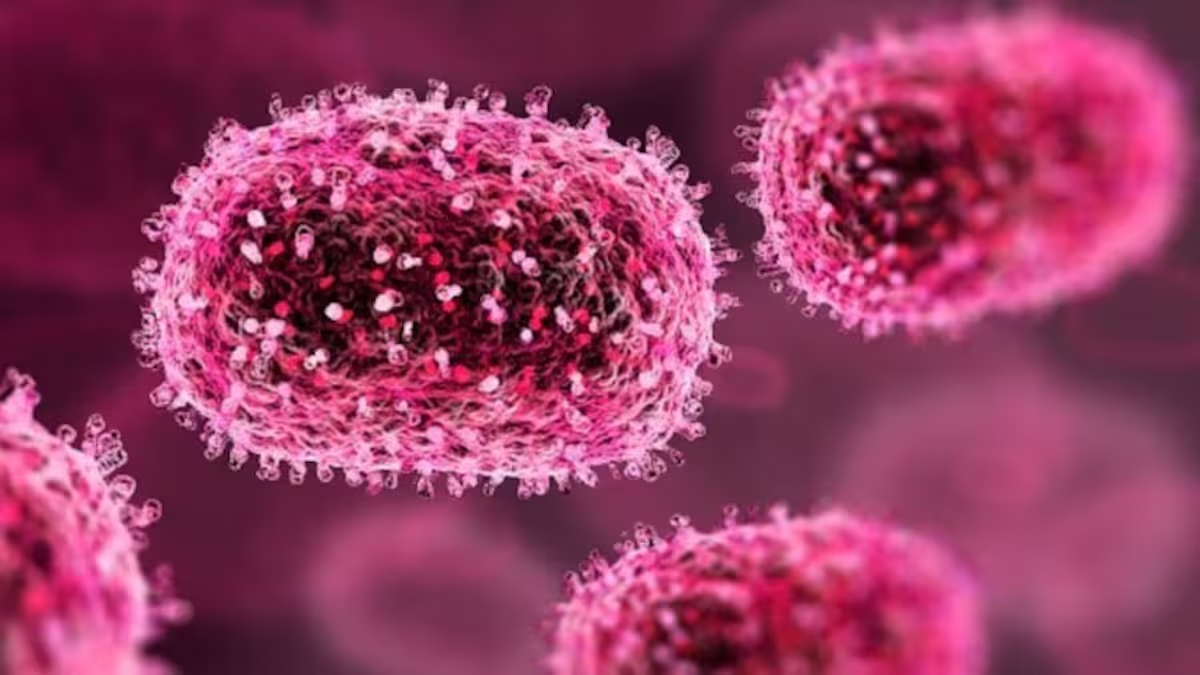
The World Health Organization (WHO) has once again classified mpox as a global public health emergency, highlighting the escalating crisis in the Democratic Republic of Congo (DRC) and its spread to neighboring countries. This marks the second time in two years that WHO has issued this highest level of alert for the disease.
Driven by a new, more transmissible variant, mpox cases in Africa have surged dramatically this year, with over 14,000 cases and 524 deaths reported. The DRC remains the epicenter of the outbreak, accounting for the vast majority of cases and fatalities.
What Is Mpox Virus?
Mpox, formerly known as monkeypox, spreads through close contact and, though often mild, can be fatal in rare cases. Symptoms include flu-like aches and distinctive pus-filled lesions. The WHO’s highest level of alert, known as a Public Health Emergency of International Concern (PHEIC), is intended to boost international research, funding, and cooperative measures to contain the disease.
The New Variant Outbreak
Unlike previous strains, this new variant is spreading rapidly through everyday contact, including sexual activity, and often presents with milder symptoms, making detection and containment challenging. The WHO’s declaration aims to galvanize global support and resources to combat the outbreak.
Mpox Outbreak In Africa
While the initial outbreak in 2022 primarily affected gay and bisexual men, this new wave is impacting a wider population, including women and children. The WHO’s decision to declare a global health emergency underscores the seriousness of the situation and the need for a coordinated international response.
Mpox was first identified in 1958 through outbreaks in monkeys, but it wasn’t until 2022 that the virus began spreading through sexual contact, sparking global outbreaks in over 70 countries. While traditionally associated with mild symptoms like fever and body aches, severe cases can cause lesions on the face, hands, and genitals.
In response, the WHO’s declaration aims to galvanize global action and funding. However, the international response to such emergencies has been uneven in the past. Dr. Jean Kaseya, Director General of the Africa CDC, emphasized the need for urgent support from global partners to address the escalating crisis.
Previous outbreaks in wealthy countries were managed with vaccines and public health measures, but Africa faces a critical shortage of vaccines and treatments. As the world watches, the focus shifts to mobilizing resources and tackling the mpox crisis head-on to prevent further spread and save lives.














Leave a comment