

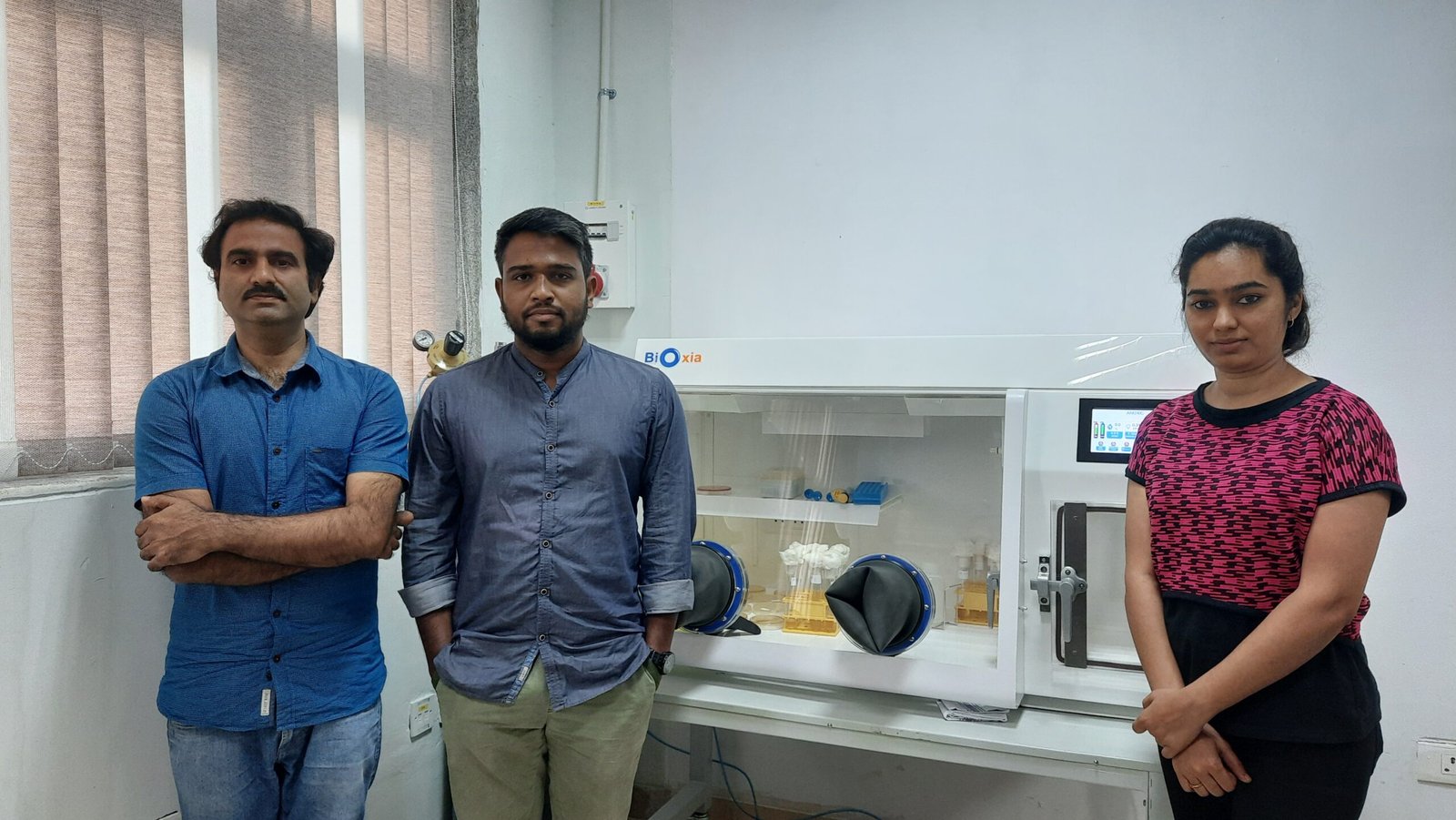
Indian Institute of Science Education and Research (IISER) Bhopal Researchers have shown the differences in the type of gut bacteria between Indian and Western populations. These variations arise from the differences in the diet patterns in these two regions – the Indian diet being richer in carbohydrates and fibre than the Western.
Dr. Vineet K. Sharma, Associate Professor, Department of Biological Sciences, IISER Bhopal, along with his collaborators from the South Dakota State University, USA has also elucidated the relationship between gut bacteria and inflammatory diseases such as Irritable Bowel Syndrome (IBS).
This pioneering work on the gut bacterial enterotype in Indian population by the IISER Bhopal scientists has been published in the prestigious high-impact Nature portfolio journal “Biofilms and Microbiomes”, in a paper co-authored by Dr. Vineet K. Sharma along with his research scholars, Mr. Vishnu Prasoodanan, Dr. Ashok Sharma, Ms. Shruti Mahajan, Dr. Darshan B. Dhakan, and Dr. Abhijit Maji from IISER Bhopal and Dr. Joy Scaria from Animal Disease Research & Diagnostic Laboratory, South Dakota State University, USA.
The human gut contains 300-500 types of bacteria that are necessary for our survival. These bacteria help in digestion, protect us from infections and even produce essential vitamins and neurochemicals. In 2011, German scientists classified human beings into three “enterotypes”, depending on the kind of bacteria that dominates the gut – Prevotella, Bacteroides or Ruminococcus.
Highlighting the uniqueness of his research, Dr. Vineet K. Sharma, Associate Professor, Department of Biological Sciences, IISER Bhopal, said, “Most enterotype studies are largely based on the Western population and have not correlated the type of dominant gut bacteria with the type of diet.” In the largest gut metagenome study from India, the IISER team studied the bacterial profile of 200 gut samples taken from people from several Indian locations – Madhya Pradesh, Delhi-NCR, Rajasthan and Maharashtra, Bihar, and Kerala.
The researchers found that the Indian gut microbiome has the highest abundance of the Prevotella genus of bacteria, in particular, a species called Prevotella copri. This bacterium also dominates the guts of other populations that consume a carbohydrate- and fibre-rich diet, such as the Italian, Madagascarian, Peruvian, and Tanzanian. The gut microbiomes of people from Western countries like the USA are dominated by Bacteroides .
To understand the functional roles of the Prevotella type bacteria, the researchers performed genomic analyses and found that the bacteria contained specific locations (“loci”) in their genomes that are responsible for metabolising complex plant carbohydrates and fibres. It is thus logical that this type of bacteria predominates the gut microbiome of healthy Indian and non-western population that consumes a diet rich in plant-carbohydrates and fibres.
“This is pioneering study that investigates the role of Prevotella species on human health in different populations, and reveals the significance of P. copri in the metabolism of complex polysaccharides and dietary fibres in non-western populations” explained the lead author
Another interesting observation by the team was that other Prevotella species such as P. intermedia and P. nigrescens were found in the guts of the Western population. These bacteria are usually found in the mouth, which points to a mouth-gut axis. These bacterial species are inflammatory and have high virulence and antibiotic resistance genes. These species make the Western population more susceptible to gut inflammatory diseases.
Speaking about the practical implications of his work, Dr. Sharma said, “Our insights would help in the development of new probiotics and prebiotics for different health-related conditions associated with the gut which is much needed for non-western populations.”














Leave a comment