


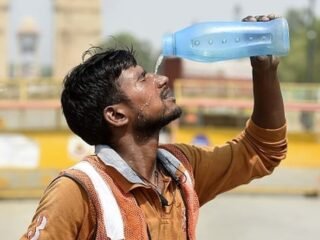
Union Health Minister Shri J.P. Nadda reviewed the heatwave situation across the country and the preparation of hospitals to deal with its impact. In a meeting with senior officials of the Health Ministry, he stressed the need for hospitals to be fully prepared to provide the best healthcare to those affected by extreme heat. To enhance readiness, he directed the setting up of special heatwave units in central government hospitals.
Advisory Issued for State Health Departments
Under the Health Minister’s directions, the Health Ministry issued an advisory to ensure all states are prepared for the upcoming heatwave season in 2024. This advisory outlines several important steps and measures that state health departments need to follow to minimize the health impacts of extreme heat.
Key Points of the Advisory:
1. Preparedness and Response:
– State Nodal Officers under the National Programme for Climate Change and Human Health (NPCCHH) are tasked with ensuring distribution of national guidelines on heat-related illnesses to all districts.
– These include the National Action Plan on Heat-Related Illnesses by the Ministry of Health and Family Welfare (MoHFW) and the National Disaster Management Authority (NDMA) guidelines for heatwave prevention and management.
2. Implementation of Heat-Health Action Plan:
– States must implement the Heat-Health Action Plan, part of the State Action Plan on Climate Change and Human Health.
– District-specific and city-level heat-health action plans should be supported for focused preparedness and response.
3. Meetings and Coordination:
– Regular meetings with State and District Task Forces on climate change and human health should be organized to update and approve the heat-health action plan, detailing Standard Operating Procedures (SOPs) for the heatwave season.
4. Reporting and Surveillance:
– From March 1, 2024, daily data on heatstroke cases, emergency attendance, and total deaths must be submitted on the IHIP portal.
– Health facilities must maintain a digital line list of heatstroke cases and undertake investigations for suspected heat-related illness deaths.
5. Early Warning and Public Awareness:
– Early warnings from the India Meteorological Department (IMD) should be disseminated daily to health facilities and vulnerable populations.
– Health advisories and IEC (Information, Education, and Communication) activities should be planned to educate the public on precautions against extreme heat.
6. Training and Capacity Building:
– Medical officers and healthcare staff should be trained on heat-related illness symptoms, case identification, clinical management, emergency cooling, and surveillance reporting.
– Community health workers should be trained on public awareness measures, first aid, referral, and reporting.
7. Health Facility Preparedness:
– Adequate quantities of ORS packs, essential medicines, IV fluids, ice-packs, and equipment should be procured and supplied.
– Active cooling strategies at health facilities and in the field should be identified, and healthcare staff should be trained accordingly.
– Sufficient drinking water and cooling appliances should be available in health facilities.
8. Health Facility Resiliency:
– Coordination with electricity distribution companies for uninterrupted power supply to hospitals is crucial.
– Measures to reduce indoor heat and conserve energy, such as cool roofs and window shading, should be adopted.
9. Mass Gatherings and Sporting Events:
– During summer events, sufficient measures should be taken to prevent and manage heat-related illnesses.
– Event planning should include checking heatwave forecasts, avoiding the hottest parts of the day, and ensuring access to safe drinking water and shaded areas.
– Medical camps, cooling areas, and water stations should be set up, with medical teams prepared to handle heat-related emergencies.
The Health Ministry’s advisory emphasizes the importance of being well-prepared for the upcoming heatwave season to protect public health. With these measures in place, the aim is to reduce the health impacts of extreme heat and ensure that healthcare facilities are ready to provide timely and effective treatment to those affected.










Leave a comment