

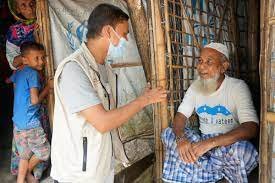
The World Health Organization and member countries in South-East Asia Region are prioritizing enhancing field epidemiology workforce as part of strengthening capacities to respond to health emergencies.
“One of the lessons from COVID-19 pandemic is that field epidemiology workforce is a critical component of national health security systems. Continued efforts are needed to invest in field epidemiology capacity strengthening,” said Ms Saima Wazed, Regional Director, WHO South-East Asia, in her message to the three-day ‘Regional Consultation: Advancing field epidemiology capacities in the WHO South-East Asia Region’ held here this week.
During COVID-19 pandemic field epidemiologists were engaged in various roles such as coordination, planning, monitoring, surveillance, contact tracing, case investigations etc.
Whether in disease outbreaks such as dengue, influenza, Nipah, measles, foodborne diseases etc or in the aftermath of natural calamities like earthquakes, cyclones and floods, field epidemiologists have been playing an important role in surveillance, risk assessment and response.
Having a health workforce prepared and qualified with field epidemiology training programmes (FETP) strengthens a country’s ability to surge and respond to future events.
The landscape surrounding FETP is evolving with emerging demands in areas of zoonotic diseases, antimicrobial resistance, genomics and non-communicable diseases.
Additionally, there are emerging new technologies which requires new scope of competencies such as data science, advanced analytics, and environmental and waste-water surveillance.
The three-day consultation from 20 to 22 February was, attended by ministries of health, technical agencies and partners, reviewed the progress, lessons and challenges in strengthening field epidemiology capacities in the Region.
“We have to address the basic questions that emerge from these challenges to ensure adequate field epidemiology capacities at the subnational and local levels, to facilitate effective and locally appropriate learning so that the trainees gain practical capacities to conduct effective surveillance, field investigations and risk assessments,” the Regional Director said.
Importantly, we need institutionalization and sustainability of the FETPs so that these capacities can contribute to essential public health functions, including primary health care.
The Regional Director emphasized on collaboration and partnerships across countries in the Region, as well as strengthening engagement of multisectoral stakeholders, including among ‘One Health’ stakeholders, to advance health security and health system resilience.
“Let us remember that our collective efforts are key to building a healthier, safer and more resilient South-East Asia. Together, let’s shape a future where our Region is better prepared, more resilient, and more competent to face any public health challenges,” the Regional Director said.
Thailand was the first country in the Region to established FETP, more than 40 years ago. Indonesia established FETP in 1982, India in 1996 and Bangladesh in 2013. These countries have well established FETP with three-tiers – advanced, intermediate and front-line. While Nepal recently initiated front-line FETP courses, Maldives and Timor-Leste are launching programmes to build field epidemiology capacities.
Promoting One Health approach, Thailand, Indonesia, India and Bangladesh have FETP veterinary epidemiology.













Leave a comment