

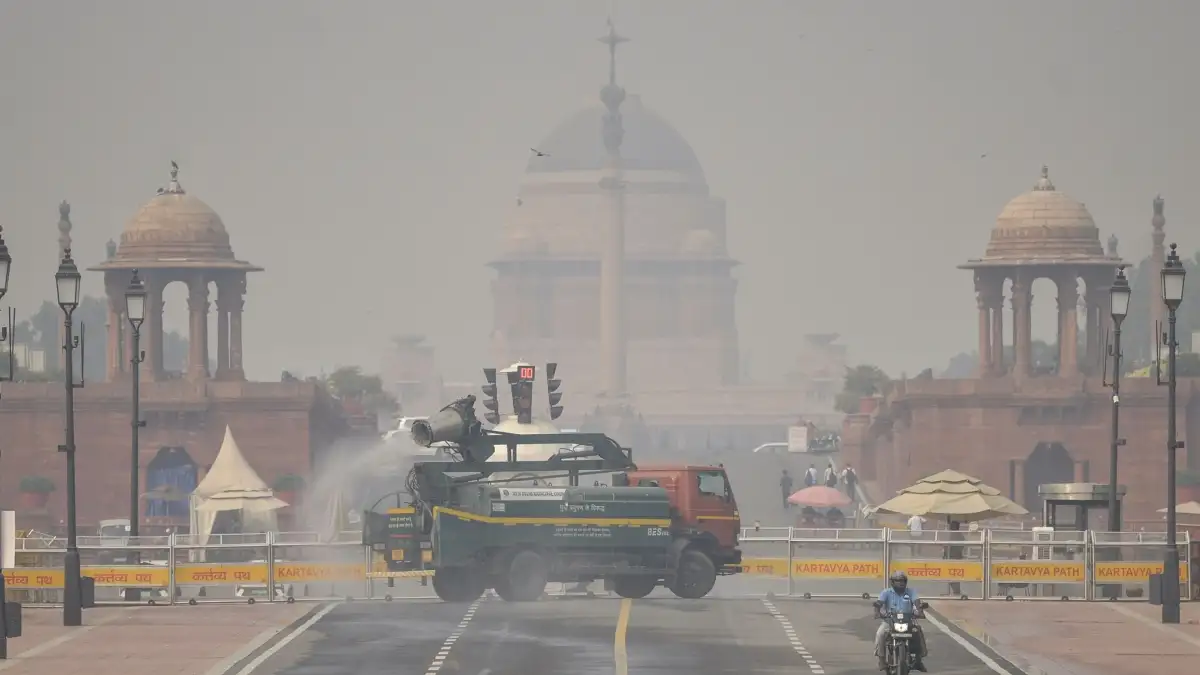
New Delhi, 12 November, 2025: Delhi woke up on Tuesday to an air quality emergency as its Air Quality Index (AQI) crossed the 400 mark, entering the “Severe” category for the first time this year. The development prompted authorities to enforce Stage III of the Graded Response Action Plan (GRAP) across the National Capital Region (NCR). With visibility dropping sharply and pollutant levels peaking, the city is once again battling one of its worst seasonal smog crises.
The sudden deterioration in air quality was caused by a combination of stagnant weather, temperature inversion, and rising emissions. Overnight, winds nearly died down across the region, allowing harmful particulate matter to remain suspended close to the ground. By early morning, visibility had dropped below 700 meters at several monitoring stations.
The minimum temperature in the city fell to about 10°C — nearly four degrees below the normal — while the maximum hovered around 27°C. These cooler conditions, coupled with calm air, created an inversion layer that trapped pollutants near the surface. Meteorologists said that wind speeds were expected to remain low for another day, with only a gradual improvement likely thereafter.
GRAP Stage III Activated
As Delhi’s AQI touched an average of 428 — the highest since December last year — authorities declared a pollution emergency and invoked Stage III of GRAP across Delhi, Gurugram, Faridabad, Noida, and Ghaziabad.
The GRAP framework, designed to tackle pollution in phases, escalates restrictions as pollution levels worsen. Stage III is triggered when the AQI crosses 400 and poses a significant threat even to healthy individuals.
What GRAP-3 Restrictions Mean
The new restrictions under Stage III are wide-ranging and intended to curb emissions from multiple sources.
- Construction and demolition activities, except for those related to essential projects like national security, healthcare, or public transport infrastructure, are banned.
- Stone crushers, hot-mix plants, and mining operations not using approved clean fuels must suspend operations immediately.
- Older vehicles — petrol cars with BS-III engines and diesel cars with BS-IV engines — are prohibited from plying within Delhi and parts of NCR. Exceptions apply only to essential services and vehicles carrying persons with disabilities.
- Diesel-operated commercial trucks and buses from outside Delhi are barred unless they meet the latest emission standards or run on CNG or electricity.
- Schools up to Class V have been advised to shift to hybrid or online learning modes to minimize children’s exposure to toxic air.
- Government and private offices have been asked to promote work-from-home and stagger office hours to reduce peak-hour traffic congestion.
These measures come on top of existing restrictions under Stages I and II, which include bans on waste burning, dust suppression protocols at construction sites, and intensified road cleaning and water sprinkling operations.
Citywide Air Quality Collapse
By mid-morning, air quality monitoring stations across Delhi painted a grim picture: 33 of the 39 active sensors recorded “Severe” levels of pollution. Northern and industrial parts of the city were the worst hit, with AQI readings above 450 in some areas.
Particulate Matter (PM2.5) concentrations in several neighborhoods crossed 600 micrograms per cubic meter — nearly ten times the safe limit prescribed by the World Health Organization. Residents reported irritation in the eyes and throat, coughing, and breathing discomfort. Hospitals noted a rise in patients with respiratory distress and asthma-related complaints.
Causes Behind the Spike
Experts attribute the worsening air quality to a mix of local emissions, meteorological stagnation, and regional pollution transport from neighboring states.
- Stagnant Winds and Temperature Inversion: With little movement in the air and cooler overnight temperatures, pollutants from vehicles, industries, and domestic sources accumulated at ground level.
- Stubble Burning: Although the number of farm fires in Punjab and Haryana has reportedly declined compared to previous years, satellite data still shows active burning in parts of northern India. Winds often carry this smoke towards Delhi during this season.
- Local Sources: Vehicular exhaust, road dust, open waste burning, and emissions from small-scale industries continue to add to the pollution load. Many areas, especially those near highways and industrial zones, recorded the highest concentrations of fine particulate matter.
Environmental experts caution that while the current weather pattern is partly to blame, sustained emissions from local and regional sources make such winter pollution spikes inevitable unless long-term mitigation is enforced.
Public Health at Risk
Air quality in the “Severe” range can affect everyone, not just those with pre-existing conditions. Prolonged exposure can lead to coughing, throat irritation, headaches, fatigue, and difficulty breathing. For vulnerable groups such as children, senior citizens, and people with asthma or heart disease, the risks are significantly higher.
Doctors are advising residents to limit outdoor activity, especially in the early morning and evening hours when pollution levels are at their peak. People stepping out are encouraged to wear N95 or equivalent masks, keep windows closed during high-pollution periods, and use air purifiers indoors wherever possible.
Daily Life Disrupted
The restrictions under GRAP-3 are expected to have a noticeable impact on construction workers, transport operators, and small business owners. Many daily wage laborers depend on construction work for their livelihood, and repeated pollution-related shutdowns have added to their financial distress.
Logistics companies have also reported delays as vehicle restrictions tighten. Office commuters are adjusting to hybrid schedules once again, while schools are trying to balance in-person and online classes for younger students.
Public transport agencies have been urged to deploy more buses and metro trains to accommodate the increased ridership expected from the vehicle bans. Authorities are also carrying out intensified road cleaning and anti-dust campaigns to control secondary pollution sources.
What’s Next for Delhi
Weather forecasts suggest that wind speeds may increase slightly in the coming days, which could help disperse pollutants and bring the AQI down to the “Very Poor” category. However, meteorologists warn that any improvement could be short-lived if emission sources remain active and wind directions shift unfavorably again.
If air quality continues to worsen and crosses the 450 threshold for more than 48 hours, the authorities may consider enforcing Stage IV of GRAP, which includes even stricter actions — halting entry of all non-essential commercial vehicles into Delhi, shutting down polluting industries, and temporarily closing schools.
A Recurring Winter Crisis
Every winter, Delhi and its surrounding regions face a familiar pattern: calm weather, stubble burning, and persistent emissions push the city into a smog emergency. Despite years of action plans, court interventions, and seasonal restrictions, structural challenges remain unresolved.
Experts argue that Delhi’s pollution cannot be tackled in isolation. The city’s air quality is influenced by a complex mix of regional sources, including agricultural practices, industrial emissions, and vehicle use patterns across northern India. Long-term solutions must therefore involve coordinated policy action among multiple states, stricter vehicle emission norms, cleaner fuel adoption, and robust waste and dust management.
What Residents Can Do
While systemic reforms are essential, residents also have a role to play in reducing pollution and protecting their health:
- Avoid outdoor exercise when the AQI is high.
- Use N95/KN95 masks if venturing outdoors.
- Limit car use; prefer carpooling or public transport.
- Refrain from burning leaves or garbage.
- Regularly service vehicles and ensure valid PUC certification.
- Plant and maintain greenery around homes to improve air quality.
- Stay updated with AQI forecasts and advisories.
The reappearance of toxic smog serves as a reminder that Delhi’s battle against air pollution is far from over. Temporary curbs may offer momentary relief, but lasting improvement will depend on sustained, year-round action — from cleaner energy adoption to urban planning that prioritizes public health over convenience.
As winds pick up and the haze gradually thins, the question remains: will the region take decisive long-term steps, or will the return of clear skies simply mark another pause before the next winter crisis?
Delhi’s future air, and the health of millions, may depend on how that question is answered.















Leave a comment