

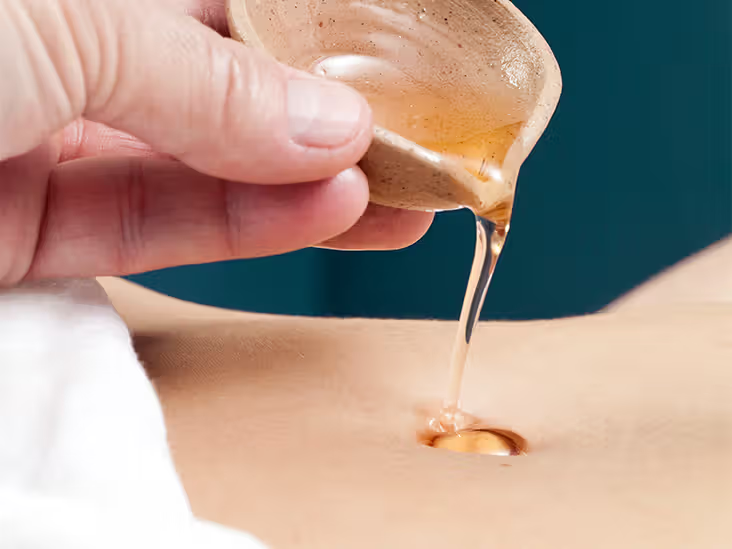
New Delhi, 10 August 2025: Ghee, or clarified butter, has been celebrated in traditional wellness systems for centuries. Known as “liquid gold” in Ayurveda, it is rich in healthy fats, vitamins, and antioxidants. While most people know about consuming ghee in food, there’s another lesser-known but time-tested practice — applying ghee to the belly button.
This ritual, rooted in ancient wisdom, is believed to have a range of benefits, from moisturizing the skin to improving digestion and balancing energy centers in the body.
Why the Belly Button?
The belly button, or navel, is more than just a mark left after birth — it is considered a vital point in the body. In Ayurveda and some other traditional healing systems, it is seen as a hub connecting various veins, nerves, and energy channels.
The belly button is linked to the Pechoti gland, which, according to traditional beliefs, can absorb substances applied around it. While scientific research on this gland is limited, the idea is that the navel acts as a central point for delivering nutrients or moisture to different parts of the body.
Nutritional Profile of Ghee
Before understanding the benefits, it’s worth noting what makes ghee so special:
- Rich in healthy fats (Omega-3, Omega-9)
- Contains fat-soluble vitamins A, D, E, and K
- Loaded with antioxidants
- Has anti-inflammatory properties
- Naturally lactose-free (when properly prepared)
These qualities are what make ghee not just a cooking ingredient but also a valuable topical application.
Top Benefits of Applying Ghee on the Belly Button
1. Deep Skin Moisturization
Applying ghee to the belly button can help hydrate and soften the skin. Since the belly button is centrally located, it may help distribute moisture through connected skin pathways, improving overall skin texture.
2. Improves Skin Glow
Traditionally, it is believed that applying ghee at night to the navel can enhance the natural glow of the face and skin. This may be due to ghee’s ability to nourish from the inside out, supporting skin health.
3. Helps in Dry Lips
Some traditional remedies suggest that chapped lips can be improved by applying a drop of ghee to the belly button. This is linked to the belief that the navel connects to facial skin and lip tissues.
4. Supports Digestion
Ayurveda suggests that applying warm ghee to the navel area can help balance digestion by warming the abdominal region and stimulating digestive fire (agni).
5. Hormonal Balance
In traditional belief systems, the belly button is connected to reproductive and hormonal health. Nourishing it with ghee is said to help maintain hormonal balance, especially in women.
6. Joint and Bone Health
The healthy fats in ghee are believed to nourish joints and bones when absorbed through the skin. While oral consumption plays a larger role here, topical application is seen as an additional support.
7. Detoxification
In Ayurveda, the navel is considered a key marma (energy point). Applying ghee is thought to help flush out toxins and restore energy balance.
8. Stress Reduction and Relaxation
The act of gently massaging warm ghee into the belly button can be calming, supporting relaxation and possibly improving sleep quality.
How to Apply Ghee to the Belly Button
If you want to try this ancient practice, here’s a step-by-step guide:
- Choose High-Quality Ghee
- Opt for pure, organic, grass-fed ghee without additives.
- Clean the Belly Button
- Use a cotton ball and warm water to gently clean the area before applying ghee.
- Warm the Ghee Slightly
- Lukewarm ghee is believed to be more easily absorbed. Heat gently — do not overheat.
- Apply a Few Drops
- Place 2–3 drops of warm ghee into the belly button.
- Massage Gently
- Massage in a circular motion for 2–3 minutes.
- Best Time to Apply
- Nighttime is preferred so the ghee can work overnight.
When to Avoid This Practice
While generally safe, applying ghee to the belly button should be avoided if:
- You have any open wounds or infections near the navel.
- You are allergic to dairy or have sensitivity to ghee.
- You have undergone recent abdominal surgery (consult your doctor first).
While Ayurveda and folk traditions strongly advocate this method, scientific studies on the direct benefits of applying ghee to the belly button are limited. The moisturizing and nourishing effects of ghee are well-documented for skin, but claims about deeper health impacts often remain anecdotal.
That said, ghee contains beneficial compounds, and massage itself can stimulate blood flow, relieve tension, and improve skin health — making this practice harmless for most and potentially beneficial.
Other Oils You Can Use Instead of Ghee
If you are vegan or don’t prefer ghee, other nourishing oils can also be applied to the belly button:
- Coconut oil — cooling and antibacterial
- Mustard oil — warming and good for joint health
- Almond oil — rich in vitamin E for skin nourishment
- Olive oil — moisturizing and antioxidant-rich
Applying ghee to the belly button is an age-old practice blending skincare, relaxation, and traditional healing wisdom. While more scientific research is needed to confirm all the claimed benefits, many people swear by it for improving skin health, digestion, and overall wellness.
In a modern world dominated by quick fixes, this simple nightly ritual offers a gentle, natural way to reconnect with your body. Whether you follow it for its possible health benefits or simply as a calming self-care practice, it’s a reminder that sometimes, the simplest traditions hold timeless value.














Leave a comment