

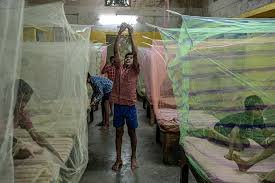
By Ms Saima Wazed, WHO Regional Director for South-East Asia
On this World Malaria Day 2024, we unite under the theme “Accelerating the fight against malaria for a more equitable world.” This theme, which is in sync with this year’s World Health Day theme “My Health, My Right’, underscores the urgent need to address the stark inequities that persist in access to malaria prevention, detection, and treatment services.
In recent years, global efforts to reduce malaria have stagnated, posing a significant threat to public health and exacerbating inequalities within communities. Everyone has the right to quality, timely, and affordable malaria services, yet this remains elusive for many, perpetuating a cycle of inequity that disproportionately affects the most vulnerable among us.
Infants and young children, especially those under five, are particularly affected, with disparities in access to education and financial resources compounding their risk.
Pregnant women also face heightened risks, as pregnancy reduces immunity to malaria, making them more susceptible to infection and severe disease. Gender inequalities, discrimination, and harmful gender norms further increase their vulnerability. Without timely and appropriate intervention, malaria in pregnancy can have devastating consequences, including severe anaemia, maternal death, stillbirth, premature delivery, and low-birth-weight babies.
Refugees, migrants, internally displaced people, and indigenous people are also at heightened risk of malaria, often excluded from disease control efforts and experiencing adverse conditions where malaria thrives. Climate change and humanitarian emergencies exacerbate these challenges, displacing populations and making them more susceptible to the disease.
Malaria remains a significant public health challenge in our Region, affecting nine out of eleven countries and accounting for a third of the global burden outside Africa. Despite the formidable obstacles we face, I am heartened by the progress we have made in recent years. In recent years, our Region witnessed a substantial decline in malaria cases and deaths, marking the most significant reduction among all WHO regions. I am encouraged by the progress made by countries such as Bhutan, Nepal, and Timor-Leste under the E-2025 initiative, demonstrating that with political commitment and collective action, malaria elimination is within reach. Timor-Leste’s achievement of three consecutive years of malaria-free status is a remarkable milestone, underscoring the power of resilience and perseverance in the face of adversity. These achievements are a testament to the dedication and tireless efforts of health workers, policymakers, and communities across our Region.
However, our journey towards malaria elimination is far from over. While several countries are on track to meet the Global Technical Strategy (GTS) targets, challenges persist, particularly in countries like Indonesia and Myanmar, where case incidence has seen an increase. Political and social instability in Myanmar have contributed to a sevenfold rise in cases, highlighting the critical intersection between health and broader socio-political factors.
The dominance of P. vivax in certain countries presents unique challenges, necessitating tailored strategies for effective control and treatment. Furthermore, the threat of imported cases in countries like Bhutan, Nepal and Timor-Leste underscores the importance of regional collaboration and cross-border surveillance to prevent resurgence and achieve sustainable malaria elimination.
On this occasion, WHO calls for renewed attention to the barriers to health equity, gender equality, and human rights in malaria responses. We must redouble our efforts to overcome these challenges and ensure that all individuals, regardless of their socio-economic status or geographical location, have access to life-saving malaria prevention, diagnosis, and treatment services. Moreover, by leveraging digital technology, we can better understand the diverse health needs of populations, collect and analyze data, and monitor progress in real-time, enabling us to identify and address health inequities through both proven interventions and innovation in service delivery.
Let us “Accelerate the fight against malaria for a more equitable world” through:
- Ending discrimination and stigma
- Engaging communities in health decision-making
- Bringing healthcare close to where people live and work through primary health care
- Addressing factors that increase malaria risk
- Including malaria control interventions in universal health coverage
Together, let us commit to accelerating the fight against malaria, forging partnerships, and implementing evidence-based strategies to achieve a more equitable world where no one is left behind in our quest to end malaria for good













Leave a comment