

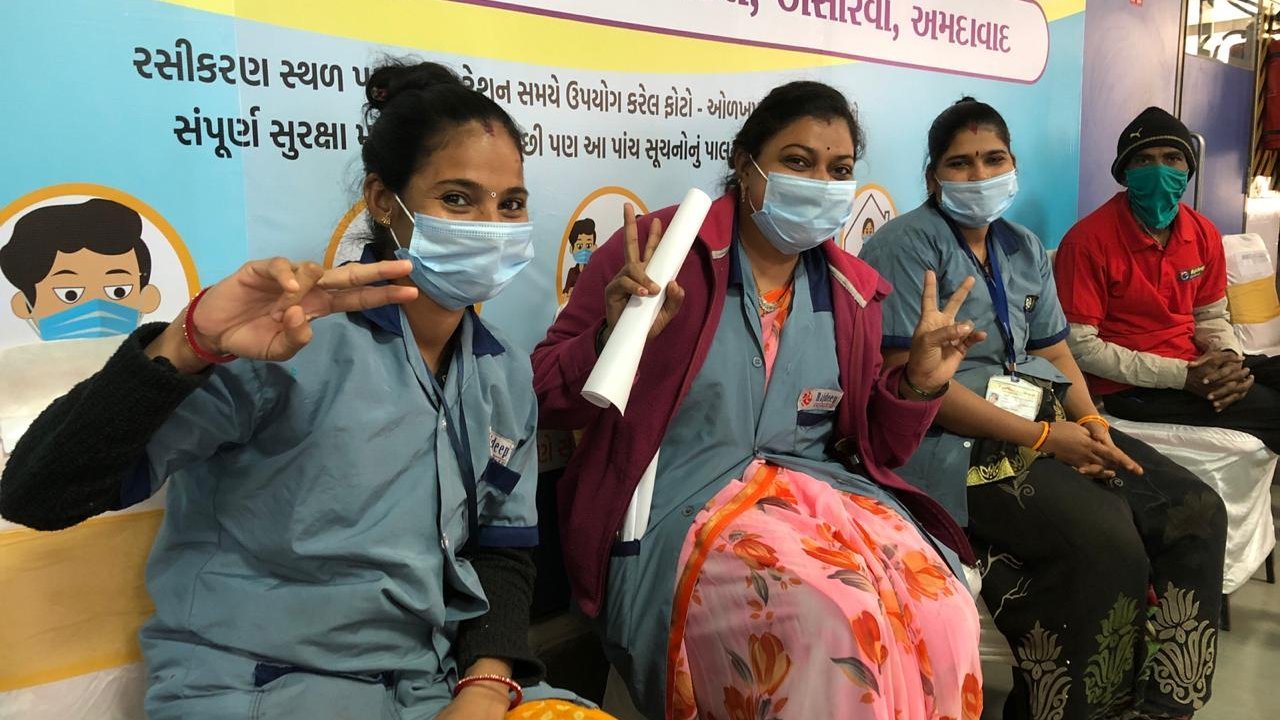
The PM also said two weeks after the second Covid-19 vaccine dose, an individual will build immunity against coronavirus. “I appeal to you not to forget coronavirus appropriate behaviour after getting the dose. The patience with which you fought coronavirus, show the same patience during vaccination now,” the PM added.
India, being the world’s most populated country after China, has said it will not create herd immunity so it may not need to vaccinate all of its 1.35 billion people. Still, it can make it one of the largest imminisation programmes in the world even if it covers its half of the population, even if countries like the United States were to vaccinate every resident.
-
COVID-19 vaccine administered at over 100 sites in Punjab, Haryana
Senior doctors and other healthcare workers were administered coronavirus vaccine at over 100 sites in Punjab and Haryana on Saturday. Authorities had earmarked 59 sites in Punjab and 77 in Haryana for the drive.
Senior doctors received the first shot of the vaccine at many locations to build confidence and dispel any apprehensions about the vaccine. Punjab and Haryana had received 2.04 lakh and 2.41 lakh doses of the vaccine, respectively.
-
Sanitation worker becomes first to get COVID-19 vaccine in Ladakh
A sanitation worker was the first person to be administered the COVID-19 vaccine in Ladakh, which has recorded 128 COVID-19 deaths and a total caseload of 9,646 since the outbreak of the pandemic.
Skalzang Chodon, a safai karamchari, hailing from Skidmang village of Nyoma block, took the first jab at Heart Foundation Hospital shortly after Prime Minister Narendra Modi launched the world’s biggest drive against coronavirus.
-
Sweeper, nurses among first recipients of vaccine in Andhra Pradesh
A government hospital sweeper and nurses were among the first recipients of COVID-19 vaccine in Andhra Pradesh, according to PTI.
Sweeper B Pushpa Kumari and a senior staff nurse Naga Jyothy were administered the vaccine at the Government General Hospital in Vijayawada. 40-year old staff nurse Manjula of the government hospital in Prodatturu town in Kadapa district became the first person to get the vaccine.
The first phase of vaccination is being carried out at 332 locations across the state. Andhra Pradesh got 4.7 lakh doses of CoviShield and 20,000 doses of Covaxin in the first round. At each location, a team of six staff have been deployed to vaccinate 100 beneficiaries per day. Each team is supervised by a doctor.
-
SII’s Adar Poonawalla takes COVID vaccine shot
Serum Institute of India chief Adar Poonawalla took a shot of the COVID-19 vaccine Covishield today as the nationwide inoculation programme was launched.
He is the chief of SII, which manufactured the Covishield vaccine in India.
I wish India & Sri @narendramodi ji great success in launching the world’s largest COVID vaccination roll-out. It brings me great pride that #COVISHIELD is part of this historic effort & to endorse it’s safety & efficacy, I join our health workers in taking the vaccine myself. pic.twitter.com/X7sNxjQBN6
— Adar Poonawalla (@adarpoonawalla) January 16, 2021
-
Listen to experts, not rumours about vaccine: Kejriwal
While inspecting the vaccination drive underway at Delhi’s LNJP Hospital, Chief Minister Arvind Kejriwal said experts have said the vaccine against COVID-19 is safe and people should not pay heed to rumours.
He further said 8,100 people will get vaccination at 81 centres in the National Capital.
-
India’s immunisation campaign probably biggest in the world, says Harsh Vardhan
ANI quoted, health minister Harsh Vardhan as saying, “This is probably the biggest immunisation campaign against COVID anywhere in the world. India has tremendous experience in handling such issues. We have already eradicated polio and smallpox.”
-
Vaccination drive begins in West Bengal
The COVID-19 vaccination drive began in West Bengal on Saturday morning, with a doctor of a private hospital receiving the first shot, officials said.
Bipasha Seth is the first person who got inoculated in the state, the hospital authorities said.
“It’s a great day for humankind. I feel elated to get the first dose,” said Seth.
West Bengal’s Minister of State for Labour Nirmal Maji also received the Covishield vaccine at the Kolkata Medical College and Hospital, the officials said.
The vaccination programme started around 10.30 am at 212 session sites, including medical colleges, urban primary healthcare centres and a few private hospitals, they said.
PTI
-
Vaccination drive begins at 285 centres in Maharashtra
The COVID-19 vaccination drive began in Maharashtra on Saturday along with the rest of the country.
Dr Ranjit Mankeshwar, Dean, JJ Hospital, in Mumbai and Dr Padmaja Saraf were among the first beneficiaries to receive the vaccine shots in Mumbai and at Jalna civil hospital, respectively.
The inoculation drive is taking place at 285 centres in Maharashtra where 100 healthcare workers will be administered the shots in a day, and cover 28,500 workers, an official said.
The state has received 9.63 lakh doses of Covishield vaccine and 20,000 doses of Covaxin vaccine, which have been distributed to all the districts.
PTI
-
Vaccine will work as ‘sanjeevani’ against COVID: Dr Harsh Vardhan
Union Health Minister Harsh Vardhan shows a dose of COVAXIN developed by Bharat Biotech at AIIMS, Delhi as the first phase of vaccination begins across the country. pic.twitter.com/QQP3p6CNdV
— ANI (@ANI) January 16, 2021
Following the launch of a nationwide vaccination drive,health minister DR Harsh Vardhan said the vaccine will work as ‘sanjeevani’ against COVID-19.
-
UNICEF congratulates India on launch of vaccination drive
UNICEF congratulated the health ministry of India and health workers ahead of the launch of the world’s largest vaccination drive.
During the launch, Prime Minister Narendra Modi also highlights India’s efforts in helping other countries during the pandemic.
“India hardships, provided medicines and medical help to over 150 countries. Whether it is paracetamol, hydroxychloroquine or testing equipment, India has made every possible effort to save people of other countries,” he said.
Congratulations to @MoHFW_India, all the health workers and teams across India on the #LargestVaccineDrive.
All systems are in place, let’s come #TogetherAgainstCOVID19 pic.twitter.com/fhLf3ubxMF— UNICEF India (@UNICEFIndia) January 16, 2021
- First dose of COVID-19 vaccine administered at AIIMS Delhi
The first dose of the coronavirus vaccine was administered to a sanitation worker at AIIMS, Delhi in the presence of Union minister Dr Harsh Vardhan.
Ahead of the vaccination drive’s launch, Prime Minister Narendra Modi said, “In the fight against corona, we’ve set an example for the world at many steps. When countries left their citizens, stuck in China amidst this pandemic, on their own, India stepped up and evacuated not only Indians but also people of other nations under Vande Bharat mission.”









Leave a comment