

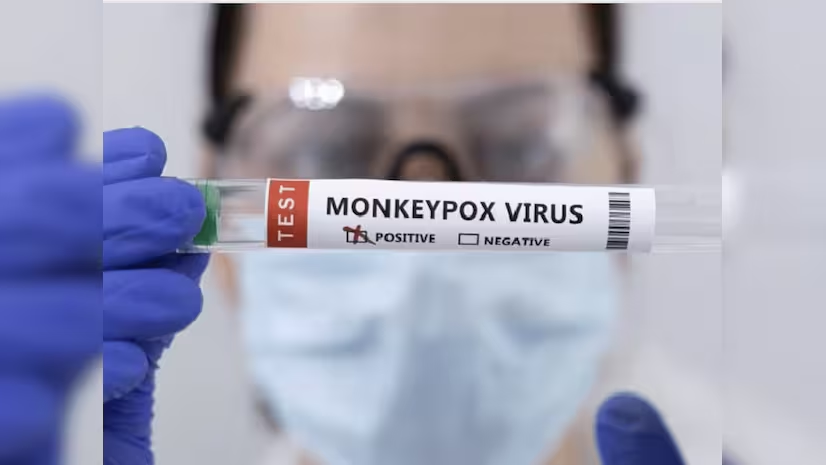
The Chandigarh health department has issued an advisory regarding Monkeypox (Mpox), a viral infection, on Saturday. The department clarified that no cases of Mpox have been reported in India, so there is no need to panic.
What is Mpox?
Mpox, caused by the monkeypox virus, is a viral infection that can spread from one person to another. The primary mode of transmission is through close contact with an infected person. It can also spread indirectly through things and surfaces that have been touched by someone with Mpox.
Mpox is considered a viral zoonotic disease, meaning it is transmitted from animals to humans. It primarily occurs in tropical rainforest areas of central and west Africa. The illness is usually self-limiting, which means it tends to resolve on its own without the need for treatment. Symptoms generally last between 2 to 4 weeks.
WHO Declares Global Health Emergency
The World Health Organization (WHO) declared Mpox a global health emergency last week. However, they reassured the public that Mpox is not another Covid-19. According to WHO, much is already known about the virus, including how to control its spread.
Who Should Be Concerned?
Suspected cases of Mpox include individuals who have developed an unexplained rash and have traveled to an affected country within the last 21 days. This also includes those who have been in contact with a person or people who have confirmed or suspected Mpox.
How is Mpox Diagnosed?
Mpox is diagnosed through a PCR test that detects the monkeypox virus (MPXV) using a viral swab taken from one or more vesicles or ulcers. India currently has 22 labs equipped for Mpox testing, along with 13 additional buffer labs. PGIMER, Chandigarh, is one of these testing facilities.
Precautions and Guidelines: Dos and Don’ts for Mpox
The health department has shared some important guidelines for the public to follow:
– If you experience symptoms like fever, headache, muscle ache, rash (especially on the face, feet, genitalia, or perianal area), and swollen lymph nodes, it is crucial to self-isolate and seek medical attention at the nearest health facility.
– Practice good hand hygiene, especially after coming into contact with infected animals or humans.
– If you have recently traveled to a country affected by Monkeypox, it is essential to self-isolate in a separate room away from family members and pets for 21 days. During this period, closely monitor yourself for any symptoms. If symptoms appear, consult a doctor immediately.
– Avoid close contact with individuals who have fever, rash, and swollen lymph nodes, especially if they have recently traveled to countries where Monkeypox cases have been reported.
Reassurance from Health Officials: ‘No Cause for Worry’
Dr. Suman Singh, director of health services in Chandigarh, assured the public by saying, “There is an isolation ward at GMSH, Sector 16, and the advisory has been issued as a precaution so people can be aware. There is no cause for worry, as PGIMER has a lab for testing facilities for Mpox.”
Additionally, Dr. PVM Laxmi from the department of community medicine and public health at PGIMER mentioned that all hospitals across the country have been instructed by the government to be prepared for potential Mpox cases, although no cases have been reported in India so far.












Leave a comment