

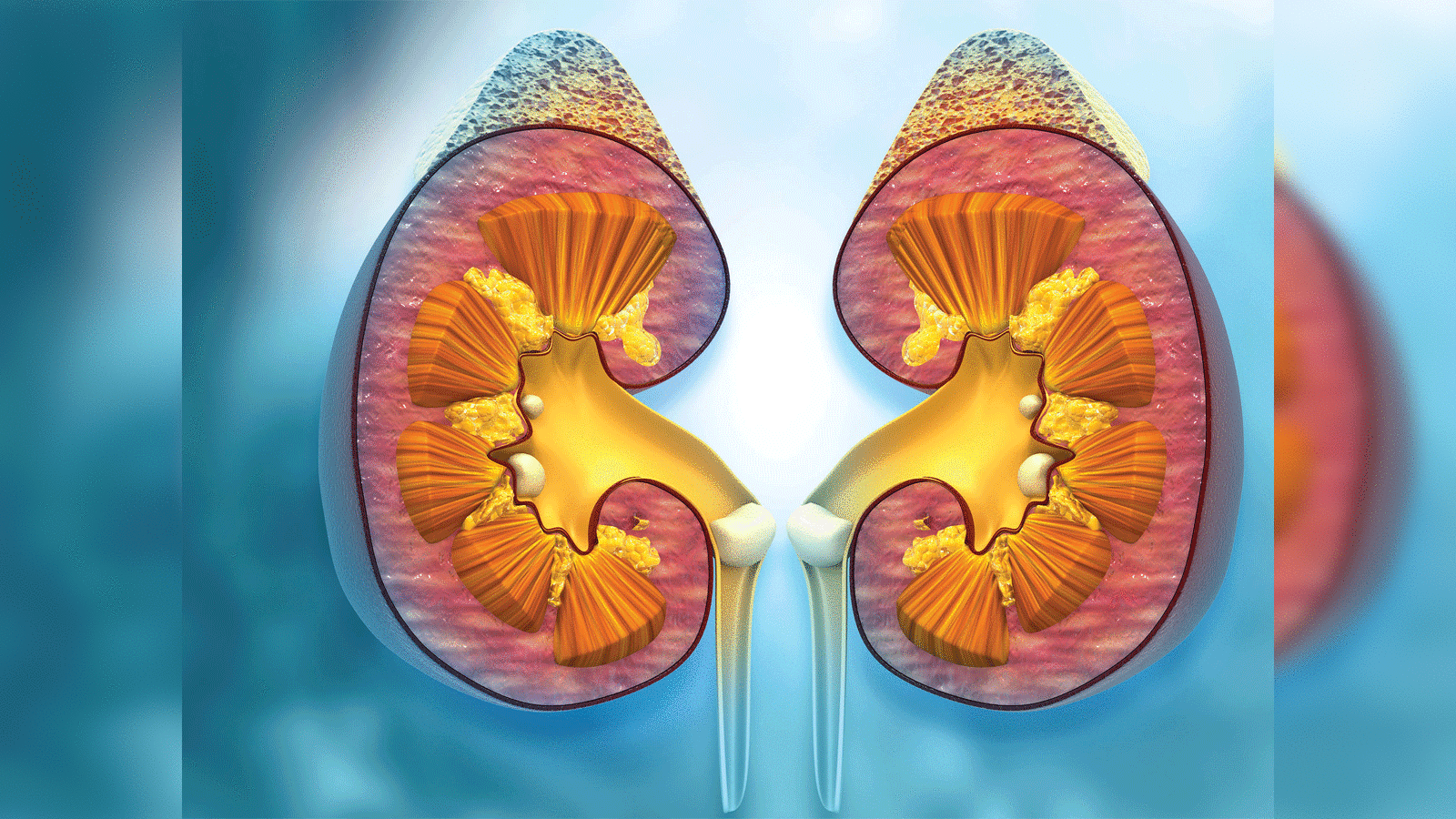
New Delhi: Chronic Kidney Disease (CKD) has long sat in the shadows of global health discussions, overshadowed by high-profile conditions such as cancer, diabetes, and heart disease. Yet, over the last few decades, CKD has quietly escalated into a worldwide crisis, one that experts increasingly warn is both underrecognized and underdiagnosed. Today, global cases of CKD have doubled, and impaired kidney function is now associated with an estimated 12% of cardiovascular deaths worldwide—a staggering figure that places kidney health at the center of the global fight against heart disease.
This dramatic rise represents more than a medical statistic; it signals a profound shift in global health burdens. CKD is no longer a disease affecting a narrow subset of older adults. It is now a pervasive, cross-border epidemic affecting people across age groups, socioeconomic backgrounds, and continents—and its impacts reverberate far beyond the kidneys themselves.
A Global Surge With Far-Reaching Implications
Chronic Kidney Disease occurs when the kidneys—responsible for filtering waste and excess fluids from the blood—gradually lose function over time. Because symptoms often emerge only when kidney function is already severely compromised, most people with early CKD are unaware they have it. This “silent” nature has allowed CKD to expand unchecked.
Over the last 20 to 30 years, several converging forces have fueled the sharp global increase:
- The rapid rise of hypertension and diabetes, the two leading causes of CKD
- Aging populations in low-, middle-, and high-income countries alike
- Increases in obesity and metabolic syndrome
- Urbanization and lifestyle changes driving unhealthy diets and reduced physical activity
- Environmental contributors such as pollution, heat exposure, and contaminated water sources
Together, these factors have created perfect conditions for kidney damage to accumulate at a population level. As a result, global CKD prevalence has now reached crisis proportions, affecting hundreds of millions of people.
The Hidden Link: Kidney Disease and Heart Disease
Perhaps the most alarming dimension of the CKD epidemic is its deep and often underestimated connection to cardiovascular disease (CVD). Impaired kidney function elevates cardiovascular risk through several mechanisms:
- Elevated blood pressure caused by fluid and sodium imbalance
- Inflammation and oxidative stress that damage blood vessels
- Accelerated arterial stiffening, raising the risk of heart attacks and strokes
- Altered regulation of hormones involved in blood pressure and vascular health
As kidney function declines, cardiovascular risk rises exponentially. Even mild kidney impairment—levels that many people do not even know they have—can significantly increase the chances of dying from heart disease.
This connection explains why kidney dysfunction now plays a role in roughly 1 in 8 cardiovascular deaths worldwide. In some regions with high CKD prevalence, that number may be even higher.
For decades, cardiovascular disease has been considered primarily a heart-centric issue. The reality is far more complex: the heart and kidneys are deeply interlinked, and damage to one often accelerates damage to the other.
Why CKD Remains Underdiagnosed
Despite its enormous global footprint, CKD often goes unnoticed until advanced stages. Several factors contribute:
1. Lack of Early Symptoms
Kidney damage progresses quietly. Fatigue, swelling, nausea, and shortness of breath typically appear only when kidney function is severely impaired.
2. Insufficient Screening
Kidney function tests—estimated GFR and urine albumin—are simple, inexpensive, and widely available. Yet screening is not consistently performed, even for high-risk patients with diabetes or hypertension.
3. Limited Public Awareness
Compared to heart disease or cancer, CKD receives far less public attention. Many people are unaware that the kidneys play a critical role in regulating blood pressure, bone health, and cardiovascular function.
4. Gaps in Primary Care
In many regions, overburdened primary care systems lack the time or resources to monitor kidney health regularly. This is especially true in underserved communities.
5. Stigma and Access Barriers
In some cultures, kidney disease carries stigma, while in low-income regions, the cost of testing or transportation creates barriers to care.
This combination of quiet progression, limited awareness, and insufficient screening creates a dangerous environment where millions develop kidney disease without knowing it.
A Growing Burden in Low- and Middle-Income Countries
While CKD is a global issue, its burden is disproportionately high in low- and middle-income countries (LMICs). Several factors intensify risk:
- Limited access to primary care and hypertension management
- High rates of undiagnosed diabetes
- Environmental nephrotoxins from contaminated water or agricultural chemicals
- Heavy manual labor in extreme heat leading to dehydration-related kidney injury
- Inconsistent access to dialysis or kidney transplantation
In many LMICs, the rapid adoption of Westernized diets—high in salt, sugar, and ultra-processed foods—has accelerated metabolic diseases while healthcare systems struggle to keep pace.
Without intervention, experts warn that CKD could become one of the most costly and deadly chronic diseases across the developing world.
High-Income Countries Are Not Immune
Even in wealthy nations, CKD prevalence has surged due to aging populations, sedentary lifestyles, and rising rates of diabetes and obesity. Furthermore, racial and socioeconomic disparities remain pronounced:
- Black, Hispanic, and Indigenous communities face higher rates of hypertension-driven kidney disease.
- Low-income populations often lack access to early screening or nutrition counseling.
- Rural regions experience shortages of nephrologists and specialists.
Because CKD so often intersects with structural inequities, it provides a window into broader systemic challenges in global healthcare systems.
Why the Kidney Crisis Matters for Global Health Planning
The global rise in CKD is not only a medical emergency; it is a public health, economic, and social challenge with far-reaching consequences.
1. Enormous Economic Burden
Dialysis and kidney transplantation are among the most expensive long-term medical treatments in the world. Many countries cannot afford to provide universal dialysis, leaving patients without access to lifesaving care.
2. Impact on Workforce Productivity
CKD disproportionately affects working-age adults in many countries, reducing productivity and increasing disability rates.
3. Strain on Healthcare Systems
As kidney disease progresses, patients experience complications requiring frequent hospitalizations. This strains healthcare systems already burdened by heart disease, diabetes, and respiratory infections.
4. Interconnection With Other Global Crises
CKD intersects with climate change, infectious diseases, and rising non-communicable diseases. For example, heat exposure—aggravated by global warming—is emerging as a major cause of CKD in agricultural workers.
What Can Be Done?
Addressing the “silent kidney crisis” requires a multifaceted approach involving public health agencies, governments, clinicians, and communities.
1. Expand Early Screening
Routine testing for kidney function should be standard for anyone with hypertension, diabetes, obesity, or a family history of kidney disease.
2. Improve Blood Pressure and Diabetes Control
Managing hypertension—even with inexpensive generic medications—dramatically reduces CKD risk.
3. Strengthen Public Awareness
Campaigns similar to those used for heart disease could help people recognize the importance of kidney health and the signs of early impairment.
4. Address Social and Environmental Risk Factors
Reducing air pollution, improving workplace protections for heat-exposed laborers, and ensuring access to clean water are essential components of global kidney health.
5. Expand Access to Preventive Care
Investing in primary care and community health workers can help detect CKD earlier and slow progression.
6. Improve Access to Treatment
Dialysis infrastructure, transplant programs, and kidney-disease management clinics must be strengthened—especially in underserved regions.
A Call to Recognize Kidney Health as a Global Priority
The doubling of global CKD cases and the revelation that impaired kidney function contributes to 12% of cardiovascular deaths underscore an urgent reality: kidney disease is not a niche condition. It is a central—and growing—pillar of global chronic disease.
Addressing this crisis requires a paradigm shift in how governments, hospitals, and communities think about kidney health. The tools for prevention exist. The challenge now is mobilizing the resources, awareness, and political will to implement them.
In the face of a silent epidemic, the world must no longer treat kidney disease as an afterthought. It is time to bring this crisis out of the shadows and into the center of global health action.

















Leave a comment